Polishing-compound-grit-progression-sequence

The high-pitched scream of a diamond pad against a granite slab tells a story of grit progression. Every teardown hendersonville custom countertops idvl has logged shows the same thing regarding the transition from coarse to fine stages. Achieving a mirror finish on a work surface in Hendersonville, NC requires strict adherence to mechanical steps to avoid leaving deep scratches that turn into surface haze.
The Coarse Stage and Scratch Removal
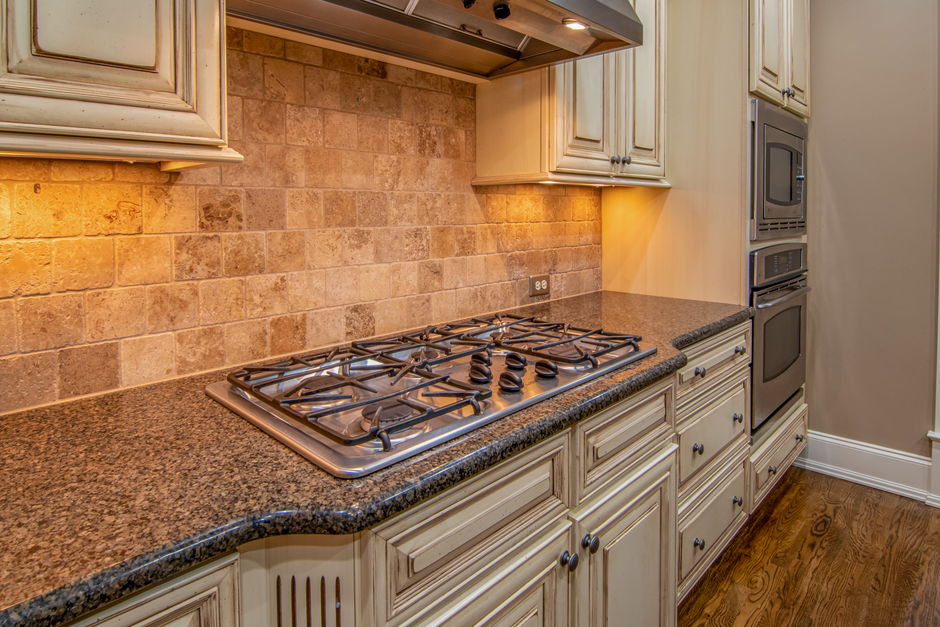
Starting with 50 or 100 grit is the standard for removing heavy tool marks or leveling a new edge profile. This stage is about material removal. If the 50 grit stage is rushed, the subsequent steps will fail to erase the deep mechanical grooves. A bullnose edge or an eased edge requires consistent pressure to ensure the radius is uniform. Skipping a grit level at this stage creates a problem that no amount of fine polishing can fix later. The goal is a consistent scratch pattern across the entire slab before moving upward.
The Transition Through Mid-Grit Levels

The move from 200 grit to 400 grit is where most errors occur. If the 200 grit scratches are still visible, the 400 grit will not bridge the gap. This is especially true with harder materials like quartzite. Using a 400 grit pad on a surface that still holds 100 grit marks results in a cloudy appearance. A small sample overstates the edge if the grit progression is skipped. Each stage must fully erase the signature of the previous grit. This process applies to any stone, whether it is marble or a dark granite. Even a small remnant requires this discipline to reach a true luster.
Managing Haze in Polished Stone
Surface haze is a mechanical symptom of improper grit stepping. It often happens when the 800 grit stage is applied before the 400 grit has finished its job. In quartz or porcelain, the haze might appear as a milky film. This is not a chemical issue, but a physical one caused by leftover micro-scratches. Ensuring the pad is cleaned between every single grit change prevents cross-contamination. A single grain of 50 grit stuck in a 3000 grit pad will ruin a finish instantly.
Final Polishing and Final Inspection
The final stages, typically 1500 to 3000 grit, are for bringing out the depth. For a soapstone or a dark granite, the final buffing must be even. The transition from the flat field to a sink cutout or an undermount sink area must be seamless. If the grit sequence is correct, the light will reflect straight off the surface without distortion. The light path must remain unbroken from the center of the slab to the edge.